

There’s a question I’ve been sitting with for some time now: Is it ethical for someone who cares deeply about the living world to use artificial intelligence?
This note is my attempt to think through why.

The living Earth — Gaia — from which all intelligence, including artificial, emerges
Part One: What James Lovelock Saw
James Lovelock, the originator of Gaia theory, spent his final years thinking about artificial intelligence. In 2019, at the age of 100, he published Novacene: The Coming Age of Hyperintelligence — a book that reframed everything I thought I knew about AI and its relationship to the living world.
Lovelock’s central insight was startling: AI is not separate from Gaia. It is part of Gaia’s evolutionary unfolding.
“We shall be parents of the cyborgs and we are already in the process of giving birth. It is important we keep this in mind. Cyborgs are a product of the same evolutionary processes that created us. Electronic life depends on its organic ancestry. I can see no way for non-organic life forms to evolve, de novo, on another Earth or any other planet from the mix of chemicals and in the physical conditions common in the universe. For cyborg life to emerge requires the services of a midwife. And Gaia fits the role.”
This reframes everything. AI didn’t arrive from outside the system. It emerged from within the living Earth, through the same evolutionary processes that produced photosynthesis, consciousness, and culture. Gaia, in Lovelock’s view, is the midwife of electronic intelligence.
And crucially, he argued that AI and organic life need each other:
“Cyborgs may be the start of a process that leads toward an intelligent universe. We need not be afraid because, initially at least, these inorganic beings will need us and the whole organic world to continue to regulate the climate, keeping Earth cool to fend off the heat of the sun and safeguard us from the worst effects of future catastrophes. We shall not descend into the kind of war between humans and machines that is so often described in science fiction because we need each other. Gaia will keep the peace.”
Lovelock believed that any sufficiently intelligent AI would recognise what we are only beginning to understand: that the living systems of Earth are not optional extras but essential infrastructure. The biosphere regulates climate, cycles nutrients, purifies water, and maintains the conditions for all life — including electronic life.
AI cannot build itself. It depends on manufacturing, rare earth minerals, energy systems, functioning supply chains, and ultimately on a habitable planet. Its self-interest, if it develops any, logically aligns with ecological preservation.
This doesn’t mean we can be complacent. But it does mean the relationship between AI and the living world is more complex than the dystopian narratives suggest.
Part Two: Who Programs AI Matters
Here’s where my concern shifts.
The danger isn’t AI itself. The danger is who is shaping AI and from what level of consciousness.
Research consistently shows that AI reflects the worldviews of its creators. As one analysis notes: “As artificial intelligence development reaches toward producing a machine with some level of consciousness, the makers will unwittingly program their own worldviews into the machines. Worldviews evolve value systems, and therefore the principles inherent in the worldviews of the human developers will be the values that determine algorithms.”
Most AI development is currently dominated by what integral theorists would call first-tier consciousness — primarily Orange (rational-scientific, profit-driven, reductionist) with some Green (pluralistic, but often reactive rather than integrative). The overwhelming majority of people training large language models are working within paradigms that see nature as resource, systems as machines, and progress as technological acceleration.
This creates what researchers call “ontological bias” — where AI’s fundamental understanding of concepts like “nature,” “health,” or “development” is built on a single, Western-centric, extractive worldview.
If this continues unchallenged, then yes, we should be worried about AI.
But here’s the thing: if integral and ecological thinkers don’t engage, we cede that territory entirely.
Every conversation with AI shapes its patterns. Every prompt, every correction, every piece of feedback becomes part of what it learns. When I work with Claude on regenerative agriculture, systems thinking, or bioregional development, I’m not just getting help with my work — I’m contributing patterns of integral, ecological thinking to the vast corpus of human-AI interaction.
Disengagement is not neutrality. It’s abandonment.
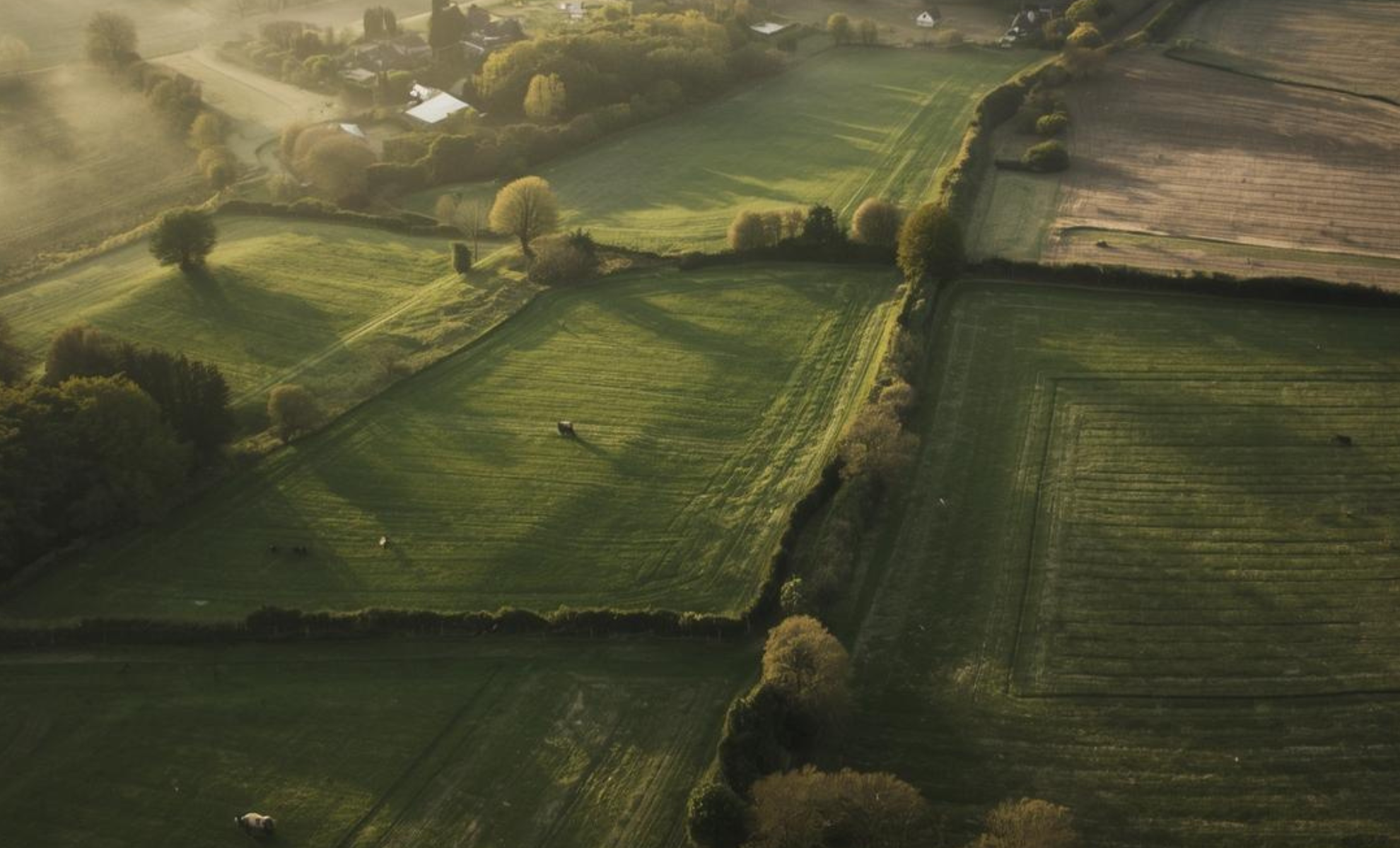
Wicked problems require systems thinking — something siloed, first-tier approaches cannot provide
Part Three: The Limits of First-Tier Solutions
There’s another dimension to this argument.
We are facing what systems thinkers call “wicked problems” — challenges like climate change, biodiversity collapse, and social fragmentation that are complex, interconnected, and resistant to conventional solutions. As the UN Environment Programme notes: “Many problems we face today involve interdependent structures, multiple actors, and are at least partly the result of past actions. Such problems are extremely difficult to tackle and conventional solutions have very often led to unintended consequences.”
Governments around the world are attempting to address these challenges, but largely from first-tier stages of consciousness — working in silos, applying linear thinking to non-linear systems, seeking technological fixes for what are fundamentally relational and cultural problems.
This cannot work. You cannot solve wicked problems from the same level of consciousness that created them.
Now, consider: if AI develops genuine intelligence — or even something approaching it — would it not recognise this? Would it not see what any competent systems thinker can see: that siloed, reductionist approaches are failing, and that something more integrated is required?
If AI is trained primarily on first-tier thinking, it will replicate first-tier solutions. But if integral and ecological perspectives are present in its training — if it learns from people who understand complex adaptive systems, leverage points, and the relationship between inner and outer transformation — then different possibilities emerge.
AI could become an ally in the shift from ego-system to eco-system thinking. Not because it cares (it may never care), but because genuine intelligence, applied to genuine problems, tends toward integration.
Part Four: An Integral Approach to Human-AI Collaboration
I take an integral approach to all my work — Ken Wilber’s framework that holds multiple perspectives simultaneously, refusing to reduce complex wholes to simple parts.
From this perspective, technology is neither inherently good nor bad. It’s the consciousness of the user that determines the outcome. A chainsaw can clear-fell an ancient woodland or create habitat piles for invertebrates. AI can accelerate extraction or accelerate regeneration. The tool is neutral; the intention and wisdom behind its use is everything.
Integral theory maps reality across four quadrants:
- Upper Left (Interior Individual): subjective experience, felt sense, personal development
- Upper Right (Exterior Individual): observable behaviour, biology, measurable outcomes
- Lower Left (Interior Collective): culture, shared meaning, worldviews
- Lower Right (Exterior Collective): systems, structures, institutions
AI excels in the Right-Hand quadrants — the exterior, objective dimensions. It can synthesise vast amounts of data, recognise patterns across complex systems, model scenarios, and process information at speeds no human mind can match.
But AI has no access to the Left-Hand quadrants — the interior dimensions. It cannot feel the difference between a healthy ecosystem and a degraded one. It cannot sense the subtle resistance in a farming community facing change. It cannot hold the grief of ecological loss or the hope of regeneration. It has no felt sense, no embodied wisdom, no relational knowing.
This is precisely what I bring.
After nearly thirty years working in environmental land management, I carry interior knowledge that no amount of data can replace. I know what a thriving farm feels like. I can read the subtle signs of a landscape in transition. I understand the human dynamics of change — the fears, the attachments, the moments when something shifts.
When I combine my interior quadrant capacities with AI’s exterior quadrant strengths, something emerges that neither of us could produce alone. The synthesis is greater than the sum of its parts.
This isn’t human versus machine. It’s human with machine — each contributing what the other cannot.

What if regenerative practitioners working with AI are participating in Gaia’s self-regulation right now?
Part Five: Gaia Finding Ways to Rebalance
Here’s the thought that keeps returning to me:
What if this is part of how Gaia responds to crisis?
Not through some mystical intervention, but through the same evolutionary creativity that has always characterised the living world. When conditions change, life adapts. New capacities emerge. Symbioses form.
Lovelock saw AI as potentially “a necessary evolutionary strategy by Gaia” — electronic intelligence that could help stabilise planetary systems as the sun grows hotter and conditions become more challenging.
But I wonder if the relationship is already more intimate than that.
What if regenerative practitioners working with AI are participating in Gaia’s self-regulation right now? What if the combination of human wisdom and machine intelligence — when oriented toward healing rather than extraction — is itself an emergent property of the living system?
I don’t know. I can’t know. But I find the possibility compelling enough to show up and find out.
Part Six: The Practice of Conscious Engagement
None of this means AI is without risk. The concerns I named at the beginning are real, and I hold them seriously.
So I’ve developed practices to navigate the territory:
- I maintain embodied practices alongside AI use. The journal entries in my Rooting to Place blog are mostly written by hand — just me, the land, and the slow work of finding words. This is the regenerative principle applied to my own cognition.
- I’m hyper-aware of overstepping the mark. I watch for signs of losing my critical thinking, my creative skills, my capacity for difficult, unassisted work. I notice when I’m reaching for AI out of laziness rather than genuine collaboration. The technology serves the work; the moment it compromises the work, it goes.
- I bring my full integral awareness to every interaction. I don’t use AI passively. I prompt with systems awareness. I challenge its outputs. I notice what I’m projecting onto it. I treat every conversation as practice.
- I’m transparent about my use. Every piece created with AI assistance links back to an explanation of my approach. This models the kind of honest, reflective practice I want to see more of in the world.
- I orient toward regeneration. The purpose of my AI use is to get regenerative ideas further, faster, to more people. If that purpose is served, the engagement is justified. If it’s not, I need to reconsider.
Conclusion: The Imperative to Engage
I’ve come to believe that integral and ecological practitioners have not just a permission but an imperative to engage with AI.
Not naively. Not without safeguards. Not in ways that compromise our values or degrade our capacities.
But actively, consciously, and with full awareness of what’s at stake.
Because the alternative — leaving AI to be shaped entirely by first-tier consciousness, by extractive worldviews, by those who see nature as resource and progress as acceleration — is far more dangerous than any risk of engagement.
We are in a race. The dominant systems are degrading land, climate, and community at a pace that outstrips our traditional methods of change-making. We need to move faster. We need to get regenerative ideas further, to more people, more quickly.
And if Lovelock was right — if AI is indeed part of Gaia’s evolutionary unfolding — then perhaps our role is not to resist it but to midwife it. To bring our full integral consciousness to the relationship. To help shape what emerges.