

Caroline Grindrod
Regenerative trainer, consultant and coach. Nearly thirty years helping land and the people who manage it work together.
- ConservationApprentice ranger, National Trust. Three Peaks and Wharfedale
- AlongsideApprenticing on a Dales farm, where my family lived
- 2001Yew Tree Farm, Coniston
- Turning pointPrince of Wales’s Summer School for Sustainable Farming
- 2015Founded Roots of Nature
My career began in environmental conservation. I trained with the National Trust as an apprentice ranger, then went on to manage large-scale conservation projects across the Three Peaks and Wharfedale in the Yorkshire Dales. At the same time I was apprenticing on a farm in the Dales, where my family lived. One taught me to plan and deliver change across whole landscapes, with the farmers, landowners and organisations who shape them. The other taught me what that change asks of the people working the land every day. Between them, I saw how often conservation and farming talk past each other.
After that, my then husband and I secured the National Trust tenancy of Yew Tree Farm in Coniston, once Beatrix Potter’s farm, in 2001. Over eleven years we ran hardy native breeds on the fell and built a diversified business around them: a farm shop, butchery, online meat sales, holiday accommodation and food events. I carried the risk and paid the bills when the weather turned. Living in Coniston, I also served twelve years with the Coniston Mountain Rescue Team. Those years on the fells, in every weather, gave me a deep love for the uplands of the UK that has shaped my work ever since.
Being selected for the Prince of Wales’s Summer School for Sustainable Farming changed my direction. It showed me farming as a vehicle for change, for our own health and for the regeneration of the planet, and it set me on the regenerative path I’ve followed ever since.
So I see land from both sides. I know what a conservation target looks like from the farmhouse kitchen, and what a stocking decision looks like from the ecologist’s survey. Most of the difficult conversations on an estate sit in that gap, and I’m comfortable there. But I don’t think the gap has to exist. When we enhance the ecosystem processes of the land, farming aligned with them can prosper too. Healthy soils and diverse plant communities mean more productive livestock and lower costs.

I trained in Holistic Management and became one of the first Savory Institute accredited professionals in the UK, before most people here had heard the words regenerative agriculture. It gave me a way of seeing whole systems that changed how I farmed and how I advised. But British farms are not Zimbabwean rangeland. As my practice evolved for our weather, soils, tenancies and politics, I needed to change the materials and the approach. That wasn’t possible within their methodology, so I stepped away and built my own.
Building it took the best part of two decades of action research. I treated my own farm, and then every farm and estate I worked with, as a field trial. Each one brought a different soil, climate, tenancy and culture, with the same question underneath: how does regenerative agriculture actually work in Britain’s own cultural and environmental context, and above all in the uplands? I tried ideas on the ground, watched closely what happened over seasons, kept what held up and let go of what didn’t. Alongside that I read deeply across Holistic Management, permaculture, soil biology and systems thinking, and learned from the landowners, ecologists, scientists and stock-people I worked beside. My white papers are the written results of that work.
That became ROOTED: a methodology grown from my own results on UK soil, not imported from somewhere else. Half the work is how you see the land. Forty per cent is designing the system. The practices come last, and when the first ninety per cent is right, they become obvious.
I founded Roots of Nature in 2015. Since then I’ve supported regenerative transitions directly across more than 100,000 acres, from crofts to some of the largest estates in the country, and trained farmers who between them manage over 500,000 acres.
Estates I’ve worked with include Ardtornish, Glen Nevis, Atholl, Gowbarrow Hall Farm and Tarras Valley Nature Reserve, alongside dozens of privately owned family farms. I’ve also worked with McDonald’s UK, FAI Farms, Arla, the Environment Agency, RSPB, the National Trust and the Wildlife Trusts.
I work with a small number of farms and estates each year, and I have a few conditions.
- 01
The whole estate, not one field.
Grazing, woodland, sporting, let farms, staff and money all affect each other. I look at all of it, or the advice won’t hold.
- 02
The whole team in the room.
Owners, managers, shepherds and keepers. The people who do the work need to own the plan.
- 03
Two years, not two visits.
Change on the land happens over seasons. I stay with you long enough to see it through the first difficult winter.
- 04
Your capability, not my dependency.
The aim is a team that can read its own land and make its own calls after I’ve gone.
I’m clear about what I don’t do. My work is grazing, management plans and the operational side of the business. I’m not a specialist in farm infrastructure, subsidy applications or habitat condition assessment, and I’ll point you to people who are.
Since 2018 I’ve run the Regenerative Grazing School with James and Helen Rebanks at their farm in the Lake District. With Clare Hill, I co-founded Roots to Regeneration, a two-year programme for farmers and food-system professionals. I’m executive director of Wilderculture, which takes this work to the scale of whole bioregions across Britain’s uplands.
I also founded Primal Meats to answer one question: is there an appetite for the very best regenerative, grass-fed meat? The answer was yes. I’ve since stepped away, but Yew Tree, Primal Meats and Wilderculture have taught me business from every side: developing a market, building a supply chain, making a farm profitable, and running a not-for-profit that has a large impact on a small running cost.
I’ve chosen a quieter path than many in this movement. Most of my time goes into the work itself: on farms, watching what happens, refining the methods, then writing about what I’ve learned. Conferences, podcasts and the speaking circuit take energy I’d rather give to that, and I’ve always believed the best marketing is doing a great job and letting word of mouth do the rest. I’m also uneasy about how readily our movement puts people on pedestals. Everyone is flawed, and nobody gets it right all the time. That’s simply human. I’d rather we celebrated good work than built celebrities. What our culture is really missing is elders: people who’ve been around long enough to see the patterns of life and help others find their way. That’s what I’m working towards. So judge me by the methods and the impact on the ground, not by my profile. I’d rather my work be known than my face.
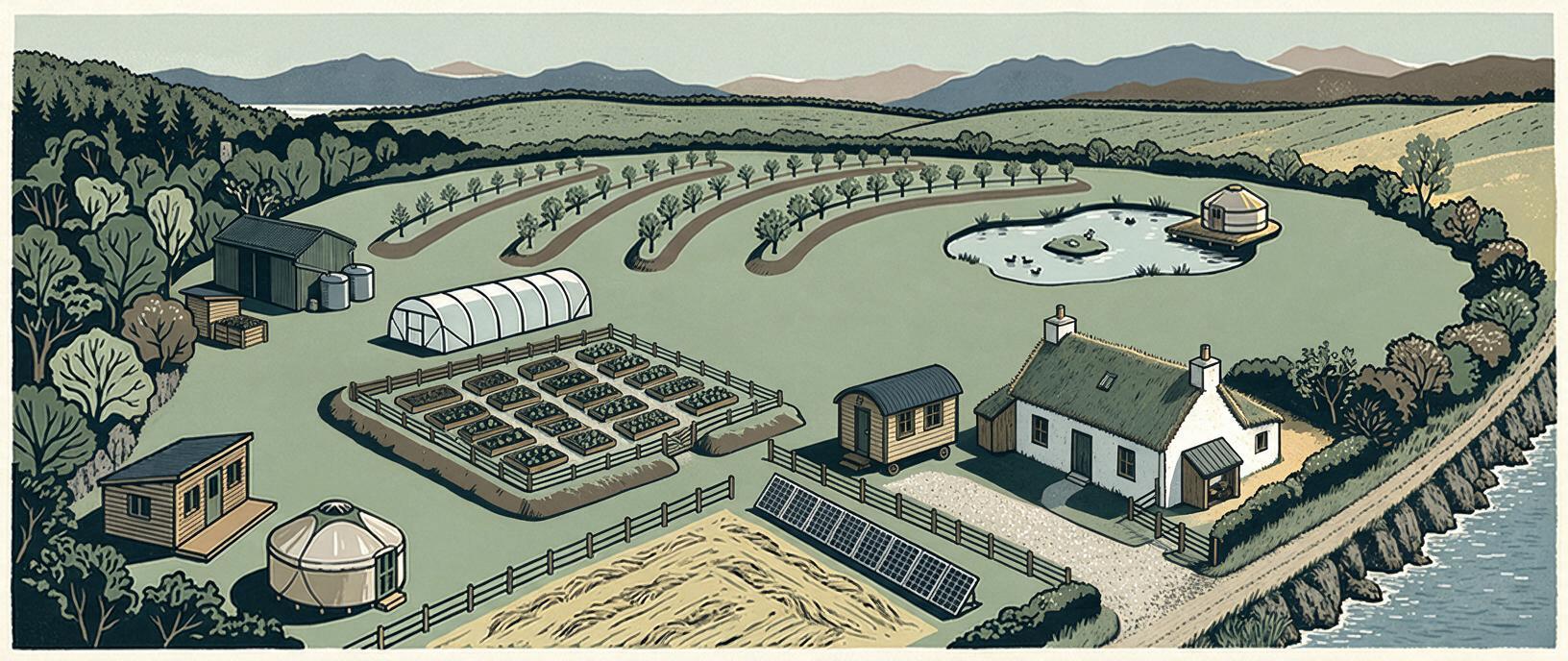
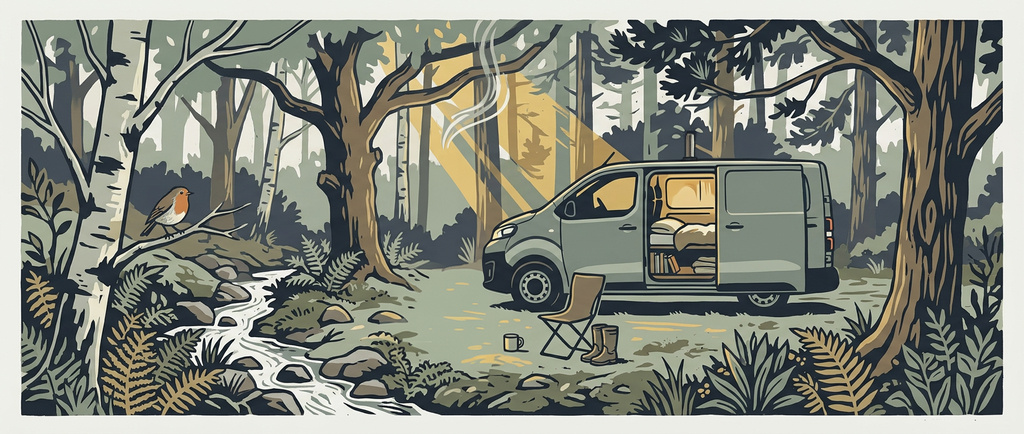
Stephen, my husband, and I have a work base in the Lake District and a croft on the Isle of Lismore, where we’ll be living from spring 2027. He runs a progressive building company exploring sustainable and regenerative ways to build. Between us we have three amazing grown-up children, each finding their own way in the world. Stephen and I are trying to design our whole life on regenerative principles, and the croft is where that starts: we’re turning it into a small regenerative holding. I’ve committed to at least ten years of rooting myself deeply on Lismore. Summers are spent on Fortino, our sailing boat, on the west coast. Much of my working life is site visits, and for those I stay in my wee van, usually somewhere lovely and wild.
Rooting to Place is the process at the heart of all this: a ten-year pilgrimage into what it takes to belong to a place, starting here on Lismore. I’m sharing it as I go. The essays, field notes and raw thinking live in the Digital Wilderness, free for anyone to wander. If you’d like to walk alongside me, join the Wilderculture membership. That’s where I share the journey week by week, and where an online course helps you design your own pilgrimage, on your own ground.

Talk about your land
If you’re facing a turning point on your farm or estate, I’d like to hear about it.