
The Most Undervalued Skill in Regenerative Agriculture
Why seeing the whole will define the next decade
After nearly thirty years working in environmental land management and fifteen years specifically in regenerative agriculture, I’ve trained farmers and land managers across the UK—from Highland estates to productive beef and dairy operations. I’ve worked with major landowners, National Park Authorities, the Environment Agency, and organisations from the National Trust to McDonald’s UK. And if you asked me what single capacity will most determine success in the next decade, my answer might surprise you.
It’s not technical knowledge. It’s not grazing management or soil biology or agroecology, though all of those matter. The most undervalued skill—the one that separates those who genuinely transform land from those who implement practices without results—is the ability to see the whole.
The Narrow Window Problem
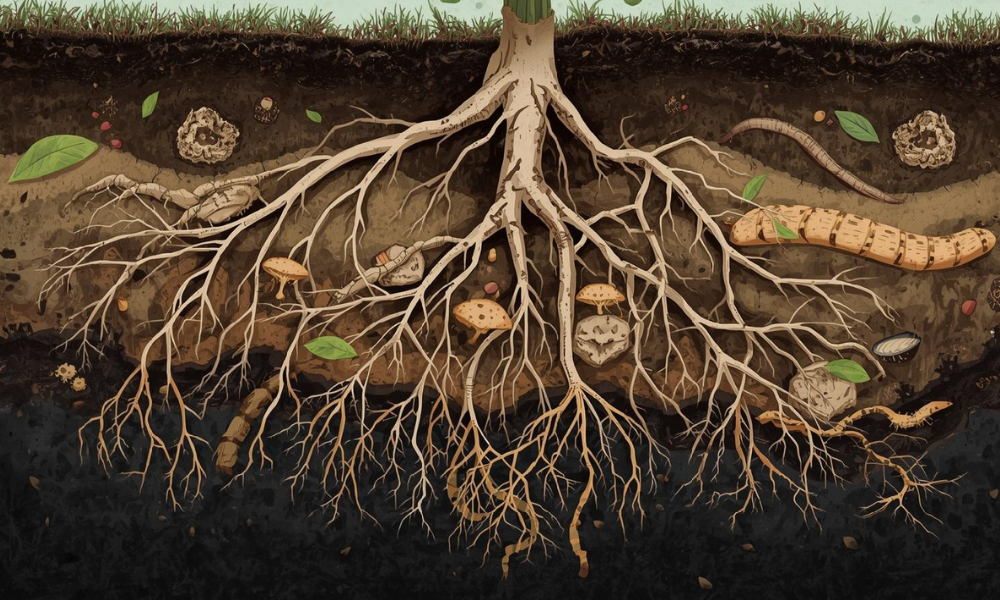
Consider soil chemistry. For a century, we’ve tested soils through the lens of soluble, plant-available nutrients. We’ve measured what plants can take up like a straw drawing from solution. And we’ve concluded, repeatedly, that soils are depleted and need external inputs.
But here’s what that narrow view misses: plants have evolved intricate, extraordinary partnerships with soil organisms that can mine nutrients our tests don’t even register. The nutrients aren’t absent. They’re in forms we weren’t looking for, accessible through relationships we’d overlooked. When we pile on synthetic phosphorus, nitrogen, and potassium, we’re not filling a genuine gap—we’re suppressing the biological systems that would have accessed those nutrients naturally, and often in better forms.
Do a comprehensive soil test that looks at total nutrient pools rather than just soluble fractions, and you’ll find most soils have abundant reserves. The geology beneath us extends to the core of the earth. What’s missing isn’t nutrients—it’s the living system that converts geology into plant food. And that system needs plants giving off root exudates, fungi extending hyphal networks, bacteria cycling nutrients, and the whole web of relationships functioning together.

The Cow as Teacher
The rumen offers another lesson in what we miss when we think in parts rather than systems. We talk about cattle nutrition as if it’s simply a matter of inputs: macronutrients, protein percentages, dry matter intake, energy density. We calculate rations as though the cow were a machine with predictable conversions.
But the cow is not a machine. It’s a walking fermentation vessel hosting billions of microorganisms across multiple chambers, each community doing different work. What we shovel in the front end bears remarkably little relationship to what’s actually happening inside that living system.
A healthy rumen takes cellulose and lignin—plant matter humans can’t digest—and converts it into microbial biomass. Then the cow digests those microbes for protein and fat. The cow isn’t eating protein and fat in any simple sense. It’s hosting an ecosystem that manufactures them. Give the same feed to two animals—one with a thriving, diverse gut microbiome and one with a damaged, dysfunctional one—and you’ll get entirely different outcomes. Same inputs, different systems, different results.
Yet how often do we factor gut health into our nutritional calculations? How often do we consider what wormers are doing to those microbial communities, or how antibiotic use ripples through the system, or which organisms we’re favouring or suppressing with our feeding choices? It’s too complex, we say. Too hard to measure. So we reduce the cow to a conversion equation and wonder why our predictions don’t hold.
The Climate Blind Spot
Nowhere is the partial view more dangerous than in climate policy. We’ve isolated carbon as a molecule, labelled it problematic, and built entire frameworks around measuring its flows. Through that narrow lens, some plant-based systems look efficient—low emissions per kilogram of output.
But that view misses almost everything that matters. It misses the carbon released when industrial agriculture ploughs soil and collapses biological communities. It misses the carbon sequestered when well-managed grazing builds soil organic matter across diverse pastures. It measures what a grazing animal exhales without measuring what the grassland inhales. We count the breathing out and ignore the breathing in.
More fundamentally, it misses that carbon is just one element in a vast system of heat dynamics, water cycling, and climate regulation that we’re only beginning to understand. Water vapour. Vegetation cover. Soil moisture. The small water cycle. These aren’t minor factors—they may be more significant than carbon in determining local and regional climate. But they don’t fit in the spreadsheet, so we leave them out.

Nested Systems, Nested Blindness
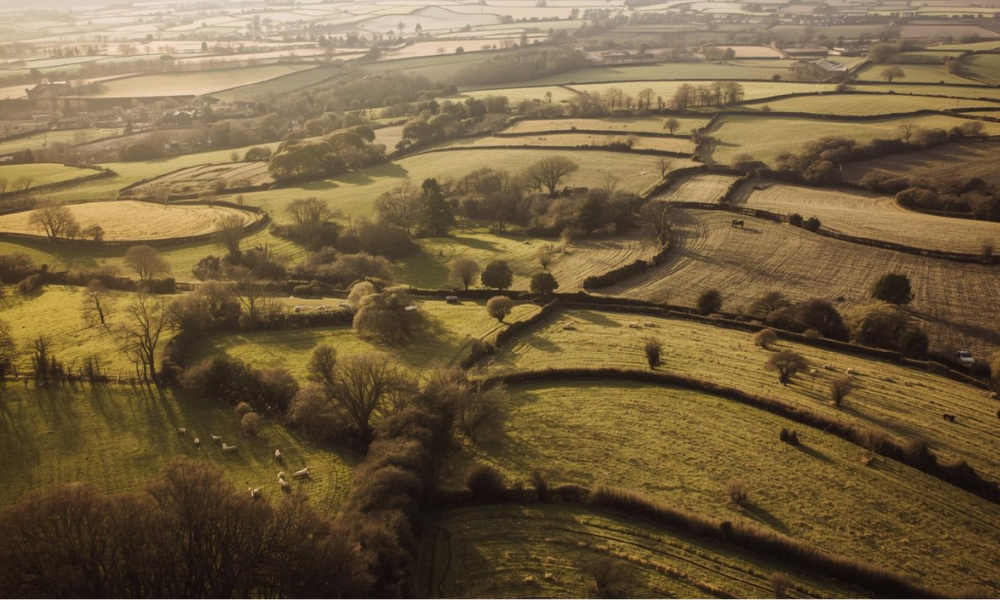
In systems thinking, we talk about nested holons—systems within systems within systems. The rumen microbiome sits within the cow, which sits within the herd, which sits within the farm, which sits within the watershed, which sits within the bioregion, which sits within planetary systems. Each level has properties that emerge from the relationships within it and cannot be predicted from the parts alone.
When we focus only on the level we can measure—the soluble nutrients, the protein percentages, the carbon molecules—we miss both the systems within (what’s happening in that gut? what’s happening in that soil biology?) and the systems around (how does this farm sit in its landscape? how does this practice ripple outward?).
This is why so many well-intentioned interventions fail or create unintended consequences. We’re optimising for one window while remaining blind to the context that determines whether our optimisation helps or harms.
The Capacity to See Whole
The ability to see systems rather than parts—to perceive relationships, to sense context, to hold complexity without collapsing it into false simplicity—is not primarily a technical skill. It’s a developmental capacity that emerges over time and often through experience.
It requires slowing down. Observing before intervening. Asking what you might be missing rather than assuming you’ve found the answer. It means learning to sit with uncertainty, to resist the seductive clarity of single-cause explanations, to stay curious about the relationships you can’t yet see.
This is what we’ve built our training around at Roots of Nature. For farmers ready to transition, our 12-month Training-Consultancy Package combines online learning, fortnightly coaching clinics, and optional farm visits to build your regenerative expertise through our ROOTED framework. It’s designed to create independent regenerative farmers who understand not just what to do, but why it works for their specific context. Packages start from £145 per month—find out more at rootsofnature.co.uk/regenerative-agriculture-training-consultancy
For land management professionals, consultants, and advisors, Roots to Regeneration is our comprehensive two-year programme that teaches regenerative system design and implementation. Participants learn regenerative practices—adaptive grazing, soil biology, agroecology—but beneath all of that, they’re developing the capacity to think in systems. To see farms as living organisms rather than production units. To design with nature as the model rather than the machine. The next cohort begins March 2026, with applications closing 31st January. Details at rootsofnature.co.uk/roots-to-regeneration
We need specialists. We need technical expertise. But the undervalued capacity—the one that will rescue us from the interrelated crises we face—is holistic thinking. The ability to see what connects. The willingness to expand our view. The humility to keep asking: what am I missing?
That’s the skill for the next decade. That’s what will take regenerative agriculture from promising practices to genuine transformation.
—
Caroline Grindrod is the founder of Roots of Nature and has spent nearly 30 years working in environmental land management. For enquiries: info@rootsofnature.co.uk