
Whole-system function
71% of England is in drought. Two neighbouring fields on the same geology had completely different summers — and the difference arrived with the rain, not the drought.
Caroline Grindrod · Roots of Nature
In the first week of July, grass across Britain was growing at ninety-four per cent of the six-year average.
A week later it was sixty-three. By the end of the month it was running at less than half.
For most of England this has been a bad summer. Seventy-one per cent of the country is in drought and no part of it is at normal status. England had six per cent of its long-term average rainfall in August; across the east and south-east, one per cent. July was the driest on record. More than fifteen hundred abstraction restrictions are in force, and in East Anglia two hundred and eighty-eight spray licences have been halved until the end of October. Wales has been in drought since the end of July, after its driest July in a hundred and ninety years. Eastern Scotland is into its second consecutive year, on groundwater that entered last winter at the lowest November levels ever recorded in Fife, Angus and Aberdeenshire.
Within that, the weather has been much the same for everybody. The outcomes have not, and the difference is not luck.
Now, the conversation that follows a summer like this is usually about carbon. The climate is changing, human activity is changing it, carbon dioxide is the principal mechanism, and reducing it is necessary work that has to continue.
But it is an argument conducted somewhere else, on a timescale of decades, between people who are not us. It offers a farmer standing in a burnt-off field in August almost no point of entry. Meanwhile there is a second set of climate mechanisms — water cycling, ground cover, transpiration, surface temperature, soil structure — operating at the scale of a single field, responding within one season, requiring nobody's permission.
You don't need a scheme to keep a canopy on the ground.
Two fields
So. Two fields, in the same region, on the same geology, under the same rain.
The first is perennial ryegrass, grazed short in the New Zealand style. It is a good system and the people running it are not fools. Where rainfall is reliable and evenly distributed it is one of the most efficient conversions of sunlight into milk anybody has designed, and the ryegrass in it does exactly what it was bred to do — respond to nitrogen under frequent defoliation, with high digestibility and fast recovery. New Zealand's own researchers, as it happens, have been moving steadily towards plantain and more diverse swards for some years.
The trouble is that the trait set which makes that grass brilliant in its designed conditions is the same trait set that fails it in a drought. Grazed tight and reseeded regularly, it carries little thatch and a thin sod, so a great deal of soil surface faces the sun. The root-to-shoot ratio is poor. Every plant in the sward is drinking from the same shallow layer, and the only things reaching deeper are the weeds.
Over the top of that sits the rotation, and the rotation is where the margin went. Turnout early to shorten the winter. Heavy silage demand through the flush. The whole thing held on a fine line to keep the sward vegetative. It works beautifully right up until the moment it doesn't, and then there is nowhere to go. Growth stalls, the rotation catches up on itself, and stock start grazing below the point at which the plant can recover — cutting the root off from deeper moisture at precisely the moment it needs it. The silage ground lies open to the sun. What is left goes into stress and heads up, and quality falls away.
Ninety-four to sixty-three in a week is what that looks like on ground with no room for manoeuvre.
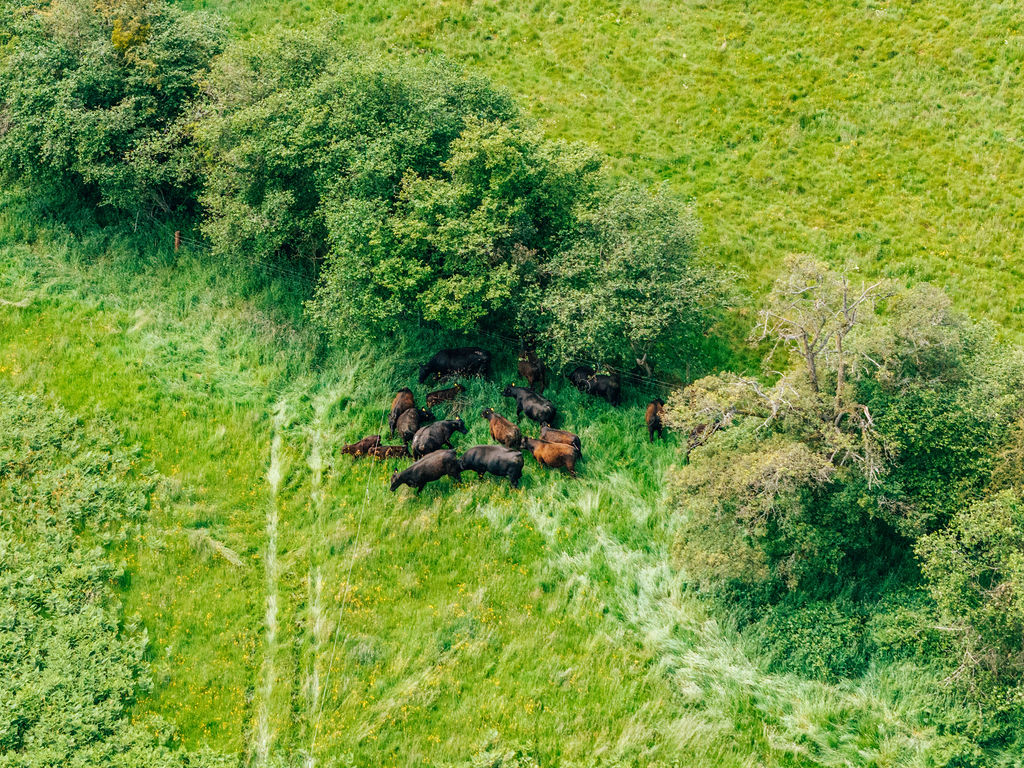
The second field is wood pasture. Mature trees with real canopies, and beneath them thirty-odd species — grasses, legumes, herbs — rooting at every depth, fibrous through to deep-delving. Grazed on a tall-grass rotation, roughly the top third taken and a long recovery after, so there is always a canopy left standing.
Before anything else, the obvious objection: that this is a productivity sacrifice dressed up as resilience. It isn't, and the trial work is now reasonably clear on it. A two-year Irish grazing comparison published in Grass and Forage Science last year put a six-species sward at nearly fourteen tonnes of dry matter a hectare against eleven and a half for a ryegrass monoculture — on seventy kilos of nitrogen against a hundred and seventy. Germinal's four-year Wiltshire trial found multi-species outyielding ryegrass-only by at least twenty-six per cent on annual average. An Oxford meta-analysis in 2022 attributed the gain to niche complementarity, and specifically to greater variation and depth in rooting structures conferring drought tolerance and stabilising forage supply through the season — which is the mechanism this whole article is about, stated in peer-reviewed literature rather than by me.
More dry matter, on forty per cent of the nitrogen. That is not a trade-off. That is a better field.
Through the drought
Through the drought, that field does several unremarkable things at once.
The deep roots reach moisture the shallow sward cannot. Diverse plants feeding a rich soil biology through root exudates build and maintain aggregates, and it is the aggregates that hold water — pore space that admits rain during a storm and keeps hold of it through a dry spell. The same structure doing both jobs.
There are high levels of mycorrhizal fungi in soil like that, and together with the trees they do something no grass root can manage alone. Through the day, the plant's transpiration pulls water into the fungal network. At night the stomata close, the pull stops, and the gradient reverses — water drawn up from depth passes out of the hyphal tips into dry soil the roots cannot reach. It has been measured directly in oak systems under severe drought, with bacterial activity concentrating where the water emerges.
Which means the trees in that field are not only shade. They are the pump.
Above ground the canopy is doing the work most people miss. Bare soil in this country has been recorded at fifty-six degrees at the surface — in spring, not August. Above about sixty degrees, soil bacteria do not survive. Under a standing canopy the surface is cooler by day and warmer by night, and the reduced swing matters as much as the reduced heat. Every plant transpiring is running an evaporative cooler, and it takes close to five hundred and ninety calories to turn a gram of water into vapour. That heat has to come from somewhere. It comes out of the field.
Walk into that field at six in the morning and your boots are wet. Walk into the other one and they are not. I have no study for that. It is what I see, on my own ground and on other people's.
The stock feel it too. In one American trial, shaded heifers rose less than four degrees in hide temperature between morning and afternoon while unshaded ones rose nearly eleven — and the shade cost nothing in performance, with no difference in seasonal weight gain. Meanwhile a rise from twenty-one to thirty-two degrees puts a beef animal's water requirement up by nearly forty per cent. Where that water is metered, abstracted or restricted — as it is for a great many farms in England this summer — that stops being a welfare footnote and becomes a supply problem.
· · ·
Both fields suffer. There is a version of this argument in which the good field sails through, and it does not. In a summer like this one everything is hurting. The second field slows down more slowly and holds on longer, but it is still a drought and it still costs.
When the rain returns
The difference is not in the drought.
The difference arrives with the rain.
Buried in the Environment Agency's own weekly report this month, in among the reservoir percentages, is a line of advice about muck spreading. It notes that water does not soak readily into baked and compacted ground, and that the risk of run-off rises accordingly. They filed it under pollution guidance. I would file it under the most useful sentence written about British farming this summer.
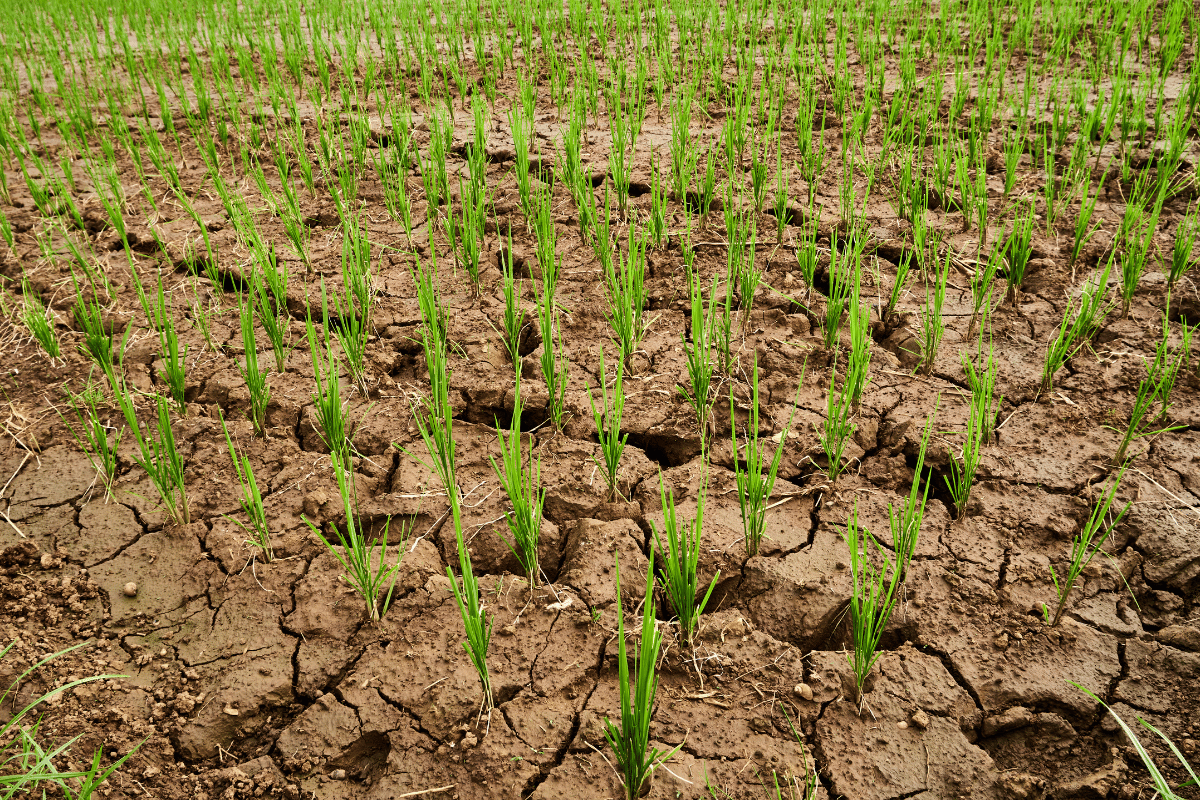
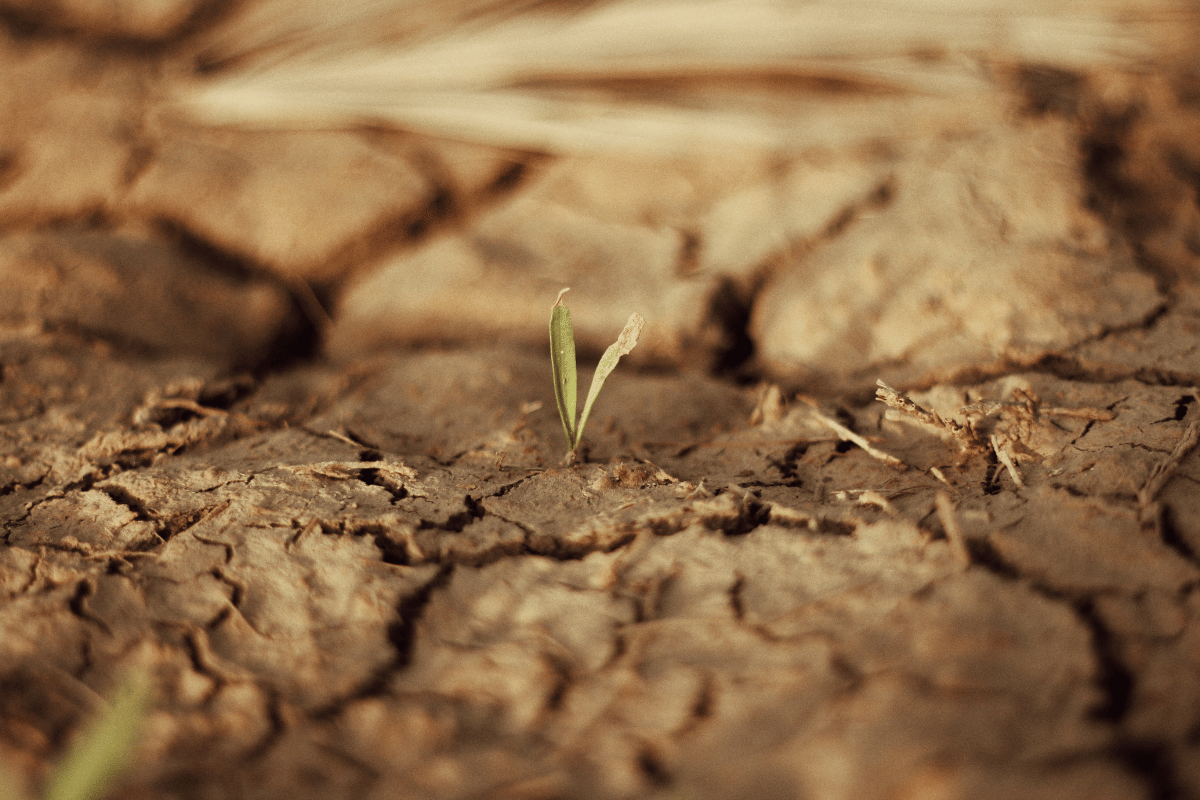
Because when the rain finally reaches the first field, the surface has capped. Stressed microbes have thrown biofilms, the top has crusted, and rain lands on it and does not go in. It runs off, or sits and evaporates the moment the sun returns. Small rain onto baked ground is worse than no rain at all — it costs the sky something and gives the soil nothing.
On the second field the same rain infiltrates. It goes down into the aggregate structure, replenishes it, feeds the fungi and the organisms and the roots. Within days there is green coming up underneath what looked dead — a sub-canopy that was there all along, waiting. The transpiration starts again, the cooling starts again, and the whole cycle picks up where it left off.
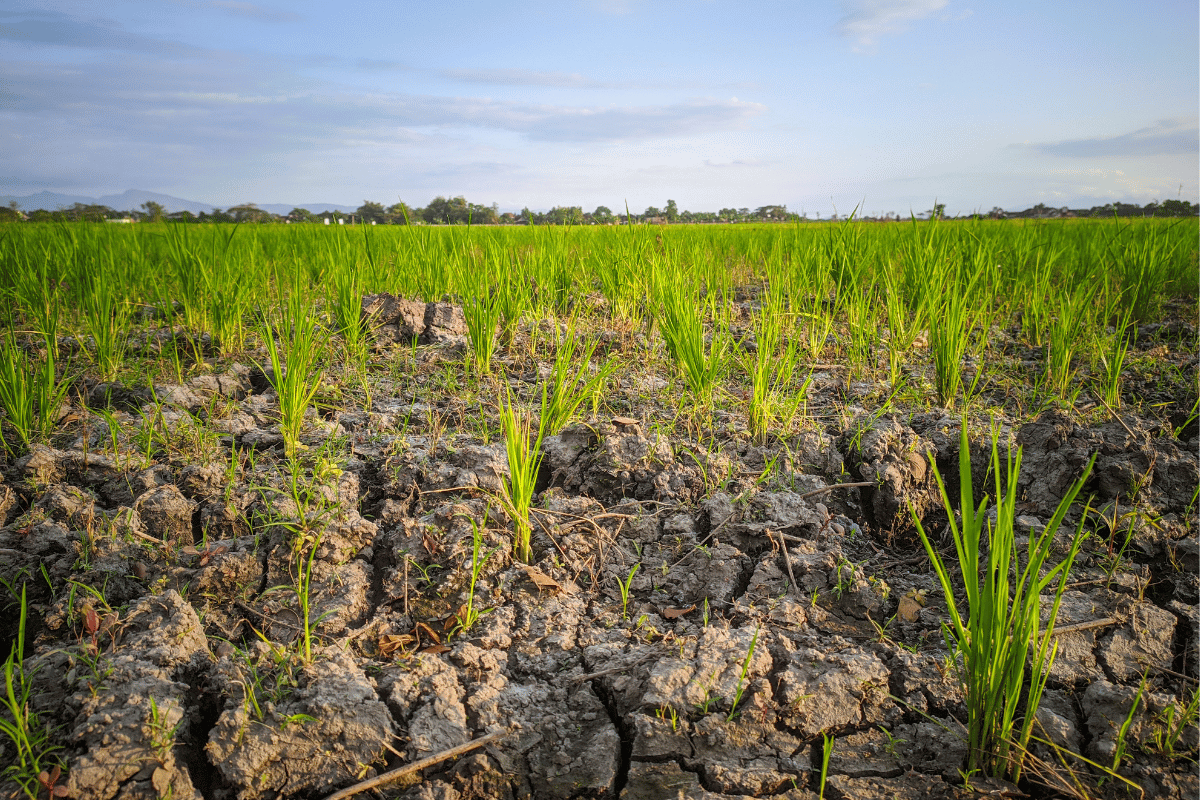
One field receives the rain. The other refuses it.
This is the distinction Allan Savory has spent a career making, and I think it is the single most useful idea a farmer can carry into the next twenty years. Drought is not simply a function of how much it rains. It is a function of how much of that rain is effective — how much of what falls actually gets in and does work. On degraded ground it may be twenty or thirty per cent of the total. On healthy ground it can exceed eighty.
Niels Corfield has arrived at the same place from a completely different direction. Across more than two hundred UK farms, with a spade and an infiltration ring, using field margins and hedge bottoms as his control — same soil type, same day, management the only variable — he has watched an inch of water disappear in seven seconds in the margin and take more than twenty minutes in the grazed field alongside. He puts water use efficiency on most dairy farms at around twenty per cent. And he says, from his own on-farm observation rather than from a trial, that he believes compaction is driving the droughts we are seeing rather than the weather.
Two practitioners, two methods, one number. That convergence is worth more than either figure alone.
Every road to the same place
I have used a dairy sward because it is the sharpest version. But the mechanism has nothing to do with dairying, and the number of different routes to the same place is the part that should worry us.
Any field grazed tight through a dry spell arrives there — and most fields get grazed tight in a dry spell, because there is nothing else to give the stock. Any field carrying two or three species arrives there, whatever the grazing, because there is no root at depth to reach with. And the one almost nobody counts: any field cut for hay or silage.
Think about what a cut actually does. You take the entire canopy off in a single day, at the driest point of the year, and leave the surface open to July. No transpiration. No shading. No dew. A plant that has just lost everything above ground, trying to rebuild from roots with no moisture to work with. In a normal year you get away with it. This year a great many people did not, and the ground they were counting on for a second cut went backwards instead of forwards.
Then add the sequence most farms are running. Turn out early to save winter feed. Cut what you can while the grass is there. Graze the rest tight because the rotation has caught up on itself. House early when it burns off, and buy in whatever you are short. Every one of those decisions is reasonable on its own, and every one of them is the decision I would probably have made in the same position.
Together they guarantee bare ground in August.
What the farm can actually carry
Underneath all of it sits the decision almost nobody goes back to: how many animals the farm carries.
Most farms are stocked to their best case, and not deliberately — it accumulates. Numbers get set against the flush, against the year the grass kept coming, against what the place carried when fertiliser was cheap. Every year since has been spent managing the gap between that number and what the ground can actually grow, and calling the gap a bad season.
Carrying capacity is not what a farm grows in June. It is what it can carry across twelve months, including feed left standing in the field for winter, with something spare for the year that goes wrong. Work that out honestly and the number usually comes out lower than the one being run — and that is the point at which most people stop, because it reads as a permanent loss.
It isn't. It is the only starting position from which a grazing rotation can actually function. Get the number right and recovery periods become real rather than theoretical, the sward gets to full leaf before it is grazed again, the roots go down, and the soil starts building fertility instead of spending it. Which means the ground carries more next year than it did this year. Numbers come back up — earned off the back of what the farm now grows rather than borrowed against what it doesn't.
That is the step almost everybody skips. They keep the number and add the rotation, and then wonder why three years of moving fences has not made the difference they were promised.
And the winter buffer and the drought reserve stop being extra things you have to find room for. They are what the difference is for.
Which is why a grazing rotation laid over an overstocked farm ends up exactly where that dairy field did. The rotation is not wrong. It cannot work, because there is nowhere for the recovery to come from.
· · ·
And here is what I have watched happen the other way. Nearly thirty years, many many thousands of acres, from production beef enterprises in the lowlands to Cumbrian fell to Highland estate. Where a farm reduces its cut, builds diversity into the sward, and manages recovery properly — as one design rather than as three separate improvements — those fields go into a dry summer later, hold on longer, and come back faster when it breaks. Not marginally. Visibly, in the same week, alongside ground that had the same rain and the same geology.
That is observation rather than trial data. But it is observation repeated across enough different ground, enough different stock and enough different seasons that I would now back it against most things I could show you on paper.
The word that matters in it is design. Not the stocking rate on its own, not the cut on its own, not the diversity or the rotation on its own. The farms where this works are the ones where those stopped being separate decisions.
Which is why this is not a grazing problem. It is a design problem, and that is a different kind of thing entirely.
What can be done, and how soon
So what can be done, and how soon does each thing work?
The fastest lever costs nothing but discipline. Every grazing plan should carry a winter reserve, and it should carry a drought reserve alongside it — standing forage, deliberately set aside, not counted in the rotation. It can be rebuilt later in the season. If the drought never comes it becomes deferred forage and delays housing, which is a bonus rather than a loss. If it does come, it is the margin the first field did not have. Livestock farmers were drawing down winter stocks in July this year for the second year running. That is exactly what a reserve exists for, and it is a decision that can be made this autumn.
After that the timescales lengthen. Never leaving the surface bare is next season's work. Diversity and rooting depth is a matter of years. Trees, shelter, keyline design, leaky dams and the water-harvesting techniques that dryland farmers elsewhere have understood for generations — that is a decade of design, and we have barely begun in Britain, because we have never thought of ourselves as a dry country.
There is money moving on this, as it happens. Last week's sixty-five million pound drought package included up to fifteen million towards on-farm reservoirs, alongside nine new public reservoirs — the first since 1991 — due to be running by 2050.
The reservoirs are needed. But read what the on-farm money is for: water storage for crop irrigation, aimed at horticulture and arable. If you are running livestock on grass, there is nothing in it for you.
Meanwhile a thousand millimetres of rain on one hectare is ten million litres, and on a great deal of the twelve million hectares of British grassland most of it is arriving and leaving again. We do not only need more reservoirs. We need the soil reservoir we already have to work — and unlike the concrete, that one comes back into service in a season.
Go and look at your own ground
And one thing before any of it, which costs nothing at all.
Go and look at your own ground — but look properly, because a glance from the gate will tell you nothing useful in the middle of August. From a distance almost everything is brown. That is not the observation.
Walk to the edges. The verge you never graze, the hedge bottom, the strip under the trees, the bank along the beck where the machinery has never been. Take a spade.
Part the canopy with your hands and get your head down into it. There is green under there that you cannot see from standing height, and it is cooler down there — a micro rainforest running its own temperature and humidity while everything above it looks finished. Then dig. Look at how the soil breaks, what it smells like, how far the roots go down, whether anything is alive in it. Do the same twenty yards out into the field, on the same soil, on the same day, and pour the same amount of water into each hole.
Then keep watching, because the part that matters happens later. Watch which one greens up first when the rain returns, and how fast. And next summer, watch which one browns off first — and how many more days the other one holds before it follows.
Same geology, same rainfall, same summer. Everything different about those two holes is something you or somebody before you decided. That is not a criticism — every one of those decisions was rational under the incentives that existed at the time. But it does mean the ceiling on that field is not set by the weather.
Your verges have been running the trial for you for thirty years. Nobody has been reading the results.
What you cannot do is fix it in one season, and anyone telling you otherwise is selling something. The pieces interact. Getting the stocking rate honest costs you in the short term before it pays you back. Getting diversity into a sward takes years and costs production while it establishes. Building a drought reserve means having somewhere else for the stock to be in the meantime. Cutting less means finding that winter feed from somewhere. Shelter is a decade. Change one on its own and you break another — which is why practice lists fail, and why the overstocked farm with a shiny new rotation concludes that regenerative farming is overhyped.
It isn't. But it works as a design rather than as a technique, and the design has to be for your ground, your stock, your rainfall and your bank. That takes guided work over time, and almost nobody gets there alone.
That is what Roots to Regeneration is built for. Applications opened at the beginning of August for the next cohort, and half-price bursaries are available for farmers who qualify — allocated in order as applications come in, and there are a limited number of them.
The rain is coming back eventually. The only question worth asking between now and then is what your ground will do with it.
Working out what your ground can actually carry, and designing a grazing system that holds through a dry summer, is the kind of work we do with farms and estates through our consultancy — and it is the core of the Roots to Regeneration programme. Applications are open for the next cohort, with half-price bursaries for farmers who qualify.
Written in dialogue with Claude (Anthropic). Ideas, arguments and experience are mine; AI helped research, structure and articulate them.
Caroline Grindrod has spent nearly thirty years in environmental land management and regenerative agriculture, from lowland production beef enterprises to Cumbrian fell farms and Highland estates. She developed the ROOTED framework and co-delivers the annual Regenerative Grazing School with James and Helen Rebanks.