
A Note on How This Writing Came to Be
There’s an old story about a ship’s engine that fails. The crew tries everything. They call in expert after expert. Nothing works. Finally, they bring in an old engineer who’s spent his whole life with engines. He listens. He walks around. He taps in one place with a small hammer. The engine roars back to life.
His invoice arrives: £10,000.
The captain, outraged, demands an itemised breakdown.
The engineer replies:
Tapping with hammer: £1
Knowing where to tap: £9,999
I think about this story a lot these days.
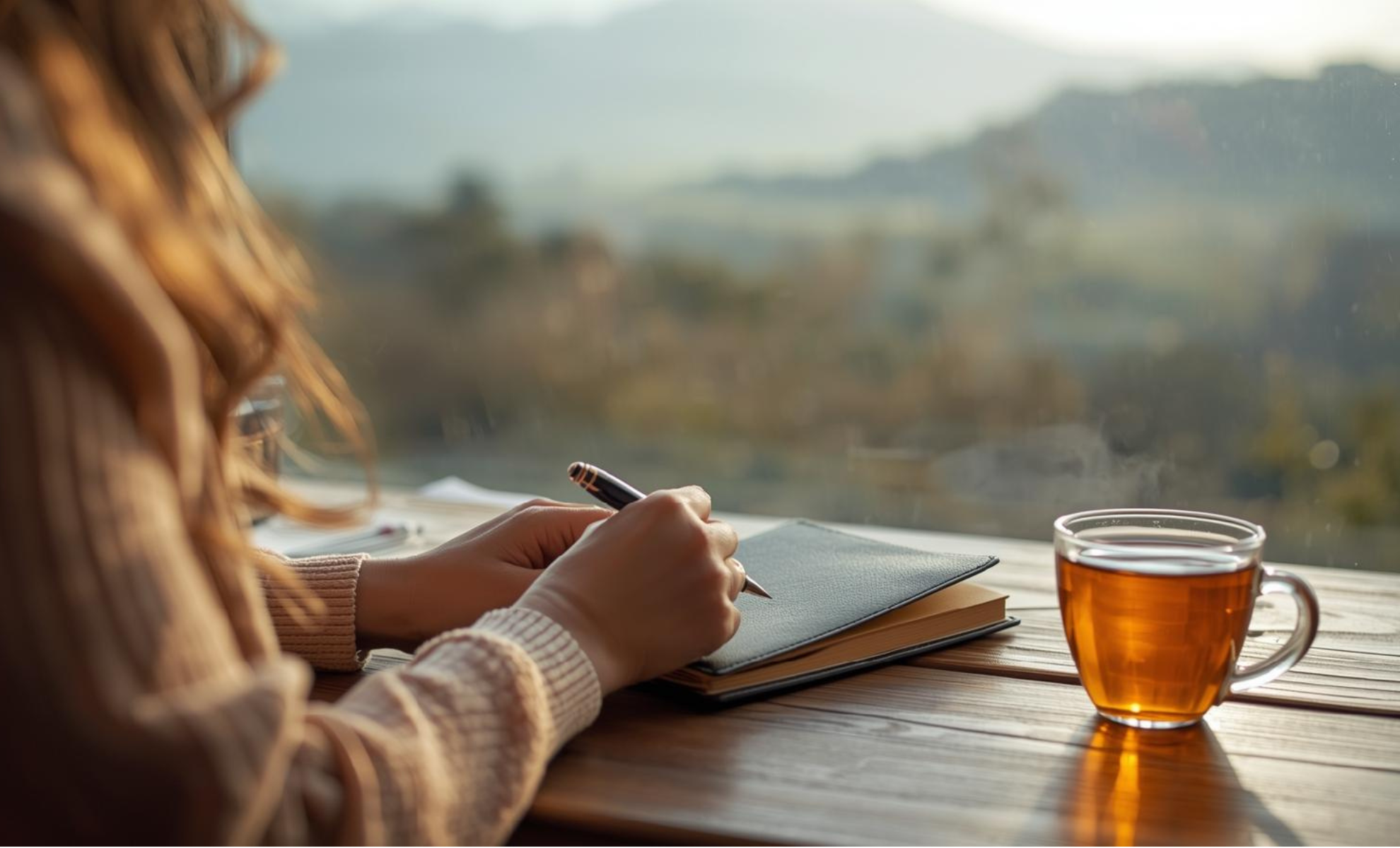
The value isn’t in the tool — it’s in knowing where to tap
The Silence
For years, I’ve struggled to write.
Not because I had nothing to say—quite the opposite. After nearly three decades working in environmental land management and over a decade specialising in regenerative agriculture, I have too much to say. Ideas stack up like sheep in a pen at gathering time. Connections between systems, patterns I’ve witnessed across hundreds of farms and thousands of acres, insights from training farmers, working with major organisations, and walking the land in all weathers and seasons.
But I’m a perfectionist. I’d start a piece, then disappear down a research rabbit hole for days. I’d want to cite everything properly, check every claim, weave in every relevant thread. By the time I surfaced, the momentum was gone, the moment had passed, and another half-finished document joined the pile.
Meanwhile, the world kept spinning. Farmers kept struggling with the same questions. Organisations kept making the same mistakes. And my ideas—the synthesis of decades of experience that might actually help—stayed locked in my head or scattered across notebooks and voice memos.
The irony wasn’t lost on me. I teach farmers about working with natural systems rather than against them. About finding leverage points. About not trying to do everything yourself when you can harness the intelligence already present in a system.
Yet there I was, trying to be researcher, writer, editor, and publisher all at once, producing almost nothing.
The Hammer
Then I started working with AI—specifically, with Claude.
At first, I felt ashamed.
This probably sounds strange coming from someone who embraces systems thinking and appropriate technology. But there’s a voice in our culture that says real writing must be solitary suffering. That if you didn’t agonise over every word yourself, it doesn’t count. That using tools is somehow cheating.
I sat with that shame for a while. Examined it. Asked where it came from and whether it was serving me or the work I’m here to do.
Here’s what I realised: AI is my hammer.
The £1 tool that, in the right hands, with the right knowledge of where to tap, can bring an engine back to life.
What AI Actually Does (and Doesn’t Do)
Let me be clear about what happens when I work with Claude.
What AI does:
-
- Helps me research efficiently, pulling together information I’d otherwise spend days hunting
- Acts as a thinking partner, helping me articulate ideas that exist as felt sense before they become words
- Refines my rough drafts, suggesting clearer structures and catching gaps in my arguments
- Holds the space for long-form thinking when my diary is fragmented into fifteen-minute slots
Shaping raw material into form — what happens when experience meets expression
What AI doesn’t do:
- Have thirty years of experience walking land, working with farmers, and watching what actually happens when theory meets soil
- Understand the felt sense of a healthy ecosystem or the subtle signs of a farm in transition
- Know my students, my clients, the specific contexts I’m speaking into
- Generate the original insights that come from synthesising pattern recognition across hundreds of real-world situations
- Care about what I care about
The decades of field experience. The integral theory framework. The understanding of human development and systems change. The relationships with farmers and land managers. The pattern recognition that comes from being present to landscapes in all their complexity.
AI helps me get what’s in my head out into the world. It doesn’t put anything in there that wasn’t already mine.
The process is iterative — a back and forth, a kind of dance
The Joy of the Dance
Here’s something I didn’t expect: working with AI is genuinely creative. Not creative despite the technology, but creative because of the collaboration.
The process is iterative — a back and forth, a kind of dance. I bring a rough idea, half-formed. Claude reflects it back, sometimes catching something I hadn’t quite articulated, sometimes missing the point entirely. I push back, clarify, redirect. We go round again. And gradually, through this dialogue, something emerges that neither of us could have produced alone.
I imagine it’s a bit like an author working with a skilled ghostwriter or editor. You know that moment when someone helps you see what you were actually trying to say? When your scattered thoughts suddenly click into a more elegant form than you could have found yourself? That’s what this feels like.
Research on human-AI collaboration confirms I’m not alone in this experience. Studies show that artists and writers report feeling “more inspired and in a state of creative flow” during the iterative refinement phases of working with AI. The key, researchers have found, is co-creation — actively shaping the work together — rather than simply editing AI-generated output. When people occupy the role of co-creator rather than editor, creativity flourishes.
This matters because there’s an assumption that AI collaboration must be sterile, mechanical, joyless. My experience is the opposite. There’s genuine pleasure in watching ideas take form through dialogue. There’s satisfaction in the crafting, even when the craft involves a different set of skills than solitary writing.
I’m not claiming this is the same as writing entirely by hand. It isn’t. But it’s not lesser — it’s different. A different kind of creative practice with its own challenges, its own skills, its own satisfactions.
An Integral Approach
I take an integral approach to all my work—Ken Wilber’s framework that holds multiple perspectives simultaneously, refusing to reduce complex wholes to simple parts.
From this perspective, technology is neither inherently good nor bad. It’s the consciousness of the user that determines the outcome. A chainsaw can clear-fell an ancient woodland or create habitat piles for invertebrates. The tool is neutral; the intention and wisdom behind its use is everything.
I’ve thought carefully about the ethical dimensions of AI. The energy use. The labour conditions in training. The potential for misuse. I don’t dismiss these concerns—they’re real and they matter.
But I also think about the net effect of my work.
If using AI helps me publish insights that shift even one farm towards regenerative practice, that’s carbon sequestered, biodiversity restored, water cycles healed, farming families supported. If it helps me train more practitioners, reach more organisations, influence more policy—the positive ripple effects compound.
I believe we’re in a race. The dominant systems are degrading land, climate, and community at a pace that outstrips our traditional methods of change-making. We need to move faster. We need to get regenerative ideas further, to more people, more quickly.
AI helps me do that.
The journal entries in my Rooting to Place blog are mostly written by hand
The Practice of Balance
That said, I’m not naive about the risks.
I know that convenience can become dependence. That tools can shape the hands that use them. That there’s something in the slow, difficult work of writing that develops a particular quality of thought.
So the journal entries in my Rooting to Place blog—the personal, place-based writing about my own journey into elderhood—are mostly written by hand. Just me, the land, and the slow work of finding words for what I’m experiencing. This is my practice of balance. The regenerative principle applied to my own cognition.
I’m hyper-aware of the risk of overstepping the mark — of losing my critical thinking, my creative skills, the capacity for difficult, unassisted work. I watch for it. I notice when I’m reaching for AI out of laziness rather than genuine collaboration. I pay attention to whether my own thinking feels sharper or duller over time.
The technology serves the work. The moment it compromises the work, it goes.
A Note on Transparency
Every piece on this site that was created with AI assistance will link to this page.
Not because I’m required to, but because transparency matters. Because I believe in modelling the kind of honest, reflective practice I want to see more of in the world. Because if we’re going to use these powerful new tools, we should do so openly, thoughtfully, and with full acknowledgment of what they are and aren’t contributing.
What you read when you read my work is genuinely mine: my ideas, my experience, my synthesis, my voice. The AI helped me research, refine, and express it. Like a good editor, it made my thinking clearer. Like a good researcher, it helped me find what I was looking for faster.
My goal here isn’t to be a great writer—I’m friends with James and Helen Rebanks, and I know good writing when I read it. My goal is to effectively communicate my knowledge and experiences in ways that benefit the more-than-human world. That’s what I’m here for. That’s what matters.