
Whole-system function
Most of what a farm spends on goes to the same few problems. Here’s why a regenerative system has fewer of them — and the process we use to work with pests and disease rather than against them.
Ask most farmers where the money really goes and it isn’t the obvious places. It’s the problems. The disease that comes round every year. The pest that keeps showing up however much you throw at it. That’s where the cash goes, and the time, and the sleep.
Conventional thinking treats each one as an enemy: find it, hit it, hit it harder next year. A regenerative system starts from a completely different question. Not how do we kill this, but why is it here at all?
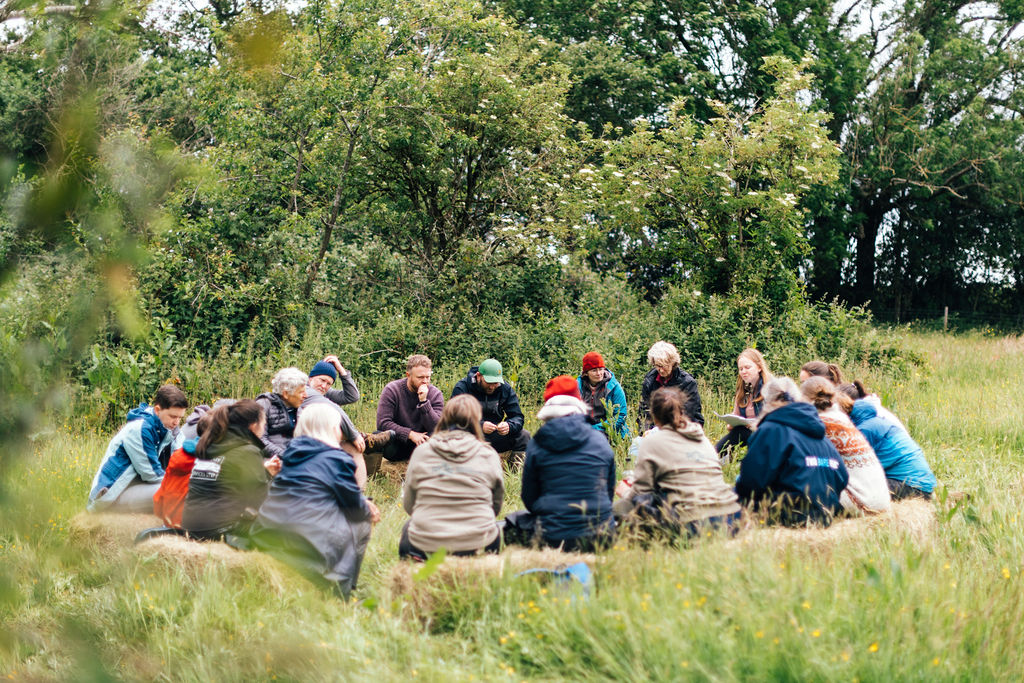
Why regenerative farms have fewer pest and disease problems
A complex, diverse, well-connected farm is simply less likely to suffer from pests and disease. That is the claim at the heart of our approach, and it holds up in the field. A farm is not a collection of separate parts — soil, plants, animals, habitat, climate. It is a set of nested systems, one held inside the next, and the behaviour that matters lives in the relationships between them.
Take a handful of your own soil: minerals, fungi, bacteria, roots, air, water. Not one of them is fertility. Fertility is what emerges between them. Watch a murmuration of starlings turn over a winter field — no bird is in charge, and yet the shape holds. The pattern lives in the relationships, not the birds. A farm works the same way. Simplify it — strip out the diversity, the predators, the complexity — and you strip out the brakes. That is when systems start to boom and bust, and that is when a species becomes a “pest”.
Because here is the thing worth saying plainly:
A species is never a problem in its own right.
It is doing its job, turning up where the conditions suit it. It becomes a problem inside our management.
The Red Flag process: working out why a problem shows up
So when a pest or disease is costing a farm, we don’t reach for the spray first. We run what we call a Red Flag process, developed with Dr Alexandra Tomlinson. We take a single species — the one that is costing you — and treat it ecologically rather than as an enemy. We build a research pack on it: its life cycle, the habitat it favours, the precise conditions under which it thrives.
Then comes the uncomfortable, useful question. How is our own management handing this species exactly what it needs? Because if it is thriving on your farm, something is rolling out the welcome mat. From there we work in two directions at once. We take away the conditions it depends on, and we bring back the regulation that would otherwise hold it in check — the predators, the competition, the parasitism that a simplified system has lost.
The Green Flag process: bringing back what’s missing
The mirror image is the Green Flag process. Here we ask the opposite question: what is missing? The dung beetles. The birds. The red clover. The diversity in the sward. The quiet regulators that would keep the whole thing in balance if they were still present. Decades — centuries, in places — of sprays, inputs and oversimplification have stripped many of them out. So we reverse the logic. We work out the conditions those species need, and we design them back in.
Designing it into the farm
This is where it stops being analysis and becomes a farm. Every red flag and every green flag becomes part of the management plan. It feeds directly into the grazing and cropping plans — it is the design process, not a separate exercise alongside it. Do it well and the whole system starts to move: pests and disease settle back into balance, the missing species return, the farm becomes more productive, and life on it gets easier, cheaper and more profitable.
That is the real prize. Not a farm that wins a war against nature every season, but one that is designed so the war rarely starts.
Working with a pest or disease that’s costing you? This is the kind of work we do with farms and estates through our consultancy — taking a real problem species, building the ecological case for shifting it, and designing it into your grazing and management plan. Get in touch about working together.
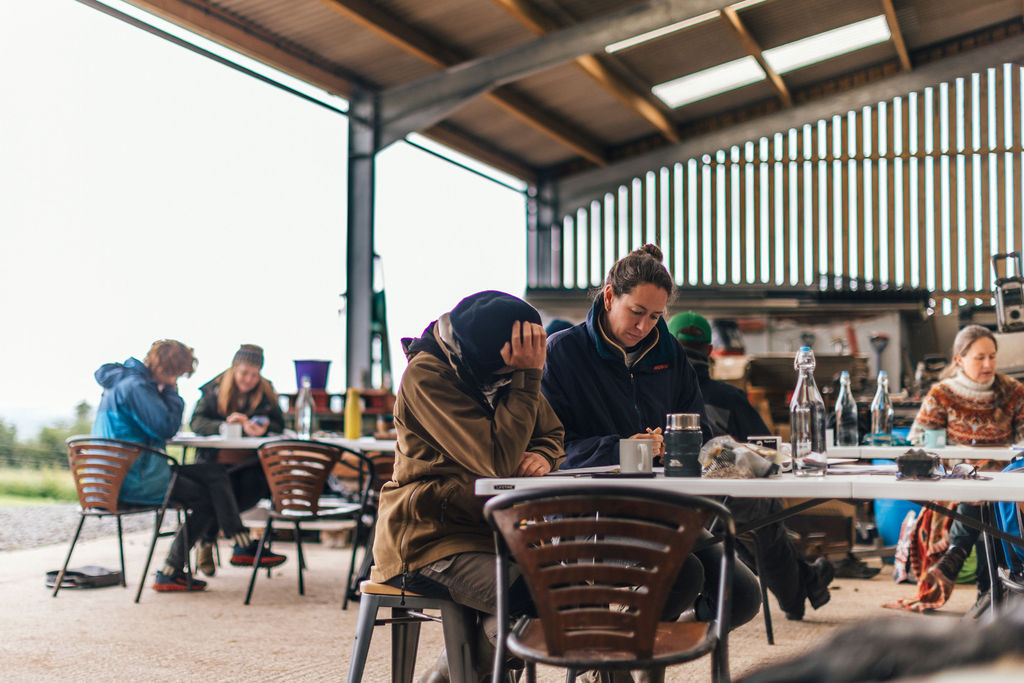
It is also one of the most enjoyable parts of our Roots to Regeneration training programme. We ran this exact process with our latest cohort at Planton Farm — and watching practitioners stop seeing pests as enemies and start reading them as signals is one of the most satisfying shifts in the whole course.
Written in dialogue with Claude (Anthropic). Ideas, arguments and experience are mine; AI helped research, structure and articulate them.