
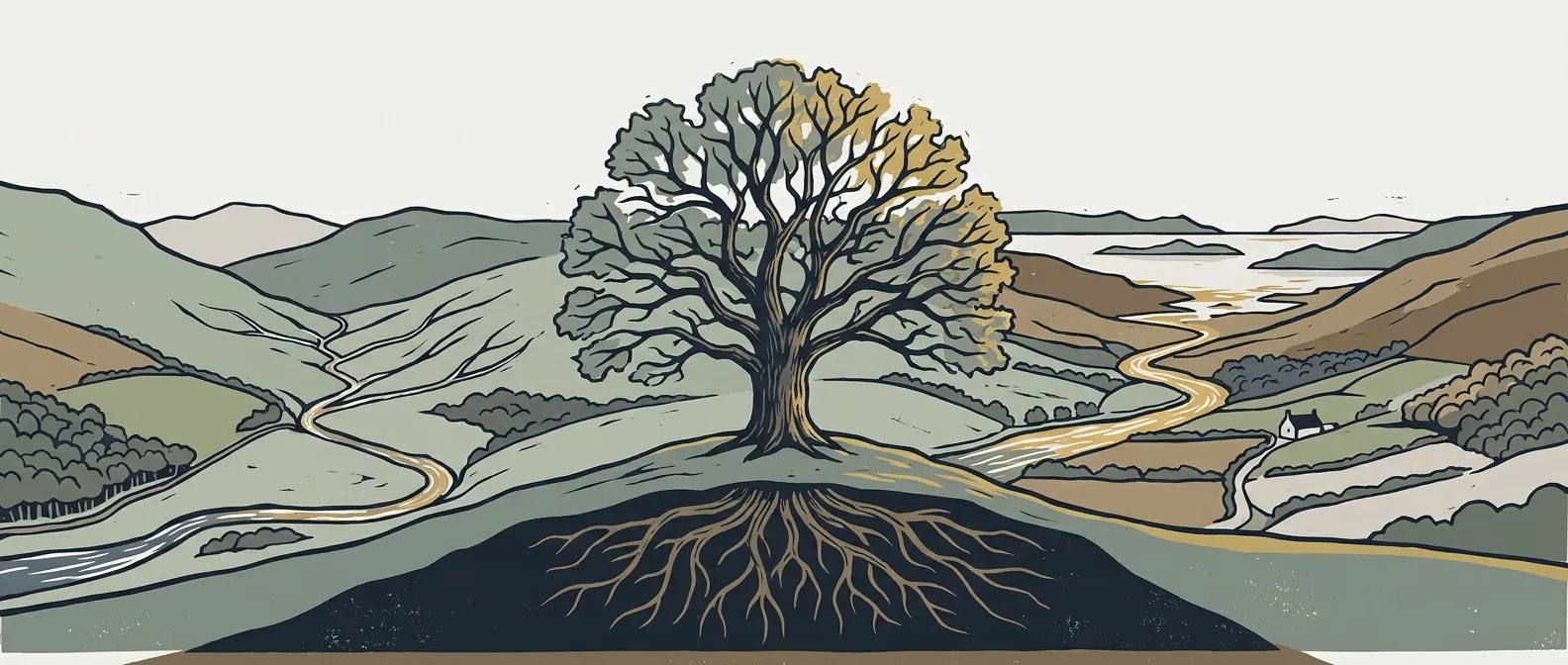
One way of seeing, at every scale
A framework for regenerating living systems, from a single field to a whole bioregion. Fifteen years in the making, on British farms and estates.
Regeneration is not a technique. It is a way of seeing.
ROOTED sits beneath everything we do at Roots of Nature, in Roots to Regeneration and at Wilderculture. It draws ecology, systems thinking, regenerative agriculture and older wisdom traditions into one coherent whole, and gives a farmer, a land manager or a community the lenses to observe, diagnose, design and act.
Most agricultural education starts with practices. We have come to believe that gets it backwards. Half the work is how you see. Forty per cent is designing the system. The practices are the last ten per cent, and when the first ninety is done well, the right ones become obvious.
Four lenses, held together. They are not steps to work through in order. At any moment you can ask what the context is, how the systems nest, which principles apply and what state the elements are in. Each answer sharpens the others.
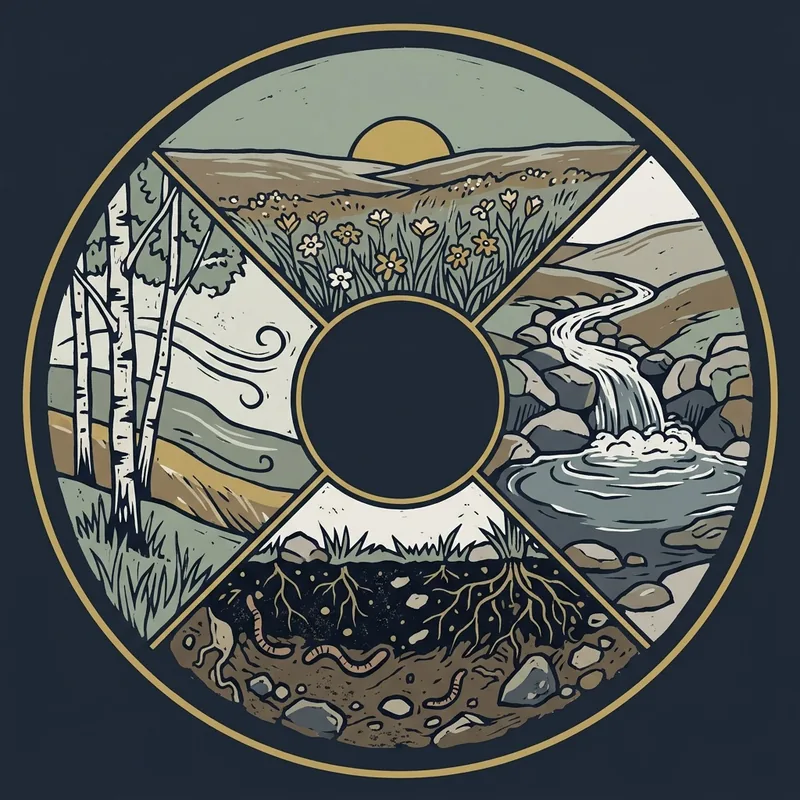
Regenerative Context
The compass. Social, economic and environmental: who we are, what we value and what we have to work with. It ends in a present-tense Context Statement that every decision is tested against.
Whole System Function
How systems nest within systems. Complexity, succession, and the Red Flag Process, which reads weeds, pests and disease as symptoms of imbalance rather than enemies to eliminate.
12 Regenerative Design Principles
The patterns that healthy living systems share, from Cycles and Seasons to Nodal Leverage. Patterns to recognise and work with.
Elemental Conditions
Fire, Water, Air and Earth: energy capture, water cycling, gas exchange, and the life of the soil. If the elements aren’t healthy, nothing built on them holds.
Discover
Design
Do
Measure runs through all three. What you learn feeds back into Discover, and each turn of the cycle goes deeper.
The same pattern, from a field to a bioregion
A cell is whole, and part of an organ. A farm is whole, and part of a landscape, which is part of a bioregion. Arthur Koestler called these holons. Living systems are built from them, and the same patterns hold at every level. That is why ROOTED works on a person, a farm, an organisation or a whole bioregion without changing shape.
A person.
Values, relationships, and the integration of body, mind and spirit.
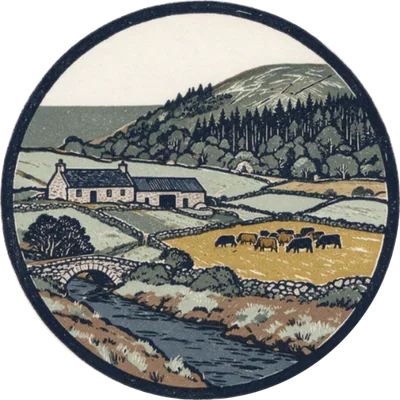
A farm or estate.
The social, economic and environmental situation; nested ecosystems; the elements on the land.
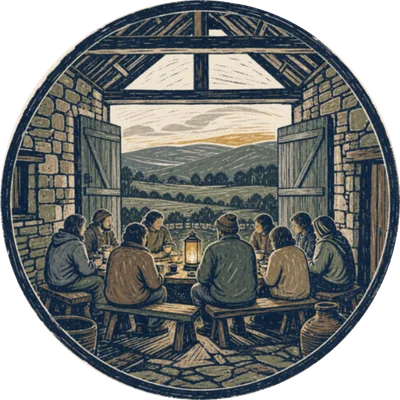
An organisation.
Mission, people and culture; how information and energy flow.
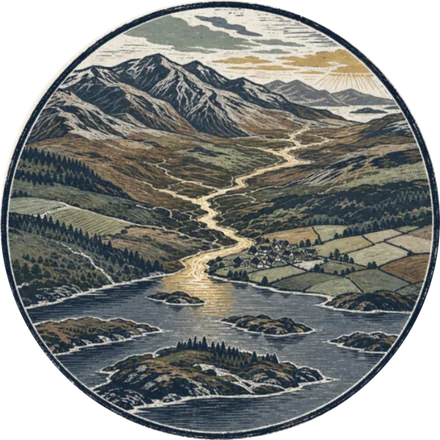
A bioregion.
Watersheds and geology, culture and tenure, the local economy and where it leaks.
| Element | On a farm | In a bioregion |
|---|---|---|
| Compass | Regenerative Context | Bioregional Context: who this place is and what makes it unique |
| Map | WILD Map and vision | Bioregional WILD Map, built up from farm maps |
| Route | Traction plan | Bioregional traction plan: this year’s goals and actions |
| Plans for specific needs | Business plan, grazing plan, scheme application | LNRS contribution, funding bid, National Park plan, food strategy |
A bioregion doesn’t start with a plan. Most bioregional plans are written for a place, by consultants or agencies or for a funding round, and they date quickly. We start where a farm starts: with a Bioregional Context, a present-tense account of who this place is, written by and with the people who live and work there. Every plan that follows is tested against it.
The framework is being used in practice across hundreds of thousands of acres of the UK.
 01
Cycles and Seasons
Life moves in rhythms; align with them.
 02
Holistic Embeddedness
Everything sits within larger wholes.
 03
Interdependent Reciprocity
What flows out must flow back.
 04
Unique Place-Based Contribution
Every place has its own genius.
 05
Closed-Loop Zero Waste
Outputs become inputs.
 06
Fractal Patterns
The pattern at one level repeats at others.
 07
Dynamic Communication Networks
Information must flow.
 08
Diversity and Synergy
Difference creates resilience.
 09
Adaptation and Antifragility
Stress, within limits, builds strength.
 10
Evolutionary Emergence
Create the conditions for complexity to unfold.
 11
Polycentric Self-Organisation
Distributed networks outlast central control.
 12
Nodal Leverage
Small moves at the right points have large effects.
ROOTED doesn’t replace Holistic Management, permaculture, agroecology or biodynamics. It holds them together. It draws on Elisabeth Sahtouris, Carol Sanford, Donella Meadows, Charles Eisenstein, Bill Plotkin, Ken Wilber and many more, on Celtic and indigenous wisdom, and on years of watching what works on British ground.
Our hope is that ROOTED becomes part of a British lineage of regenerative agriculture: grown from these islands’ soils, weather and farming traditions, and handed on from one generation of practitioners to the next.
On your farm or estate.
Bespoke consultancy, built on ROOTED from the first visit.
Explore consultancyLearn it in depth.
Roots to Regeneration, the two-year programme for farmers and food-system professionals.
About R2R